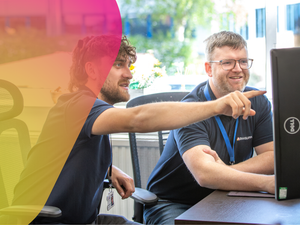
For schools, reliable technology is about more than keeping computers running. It helps teachers prepare and deliver lessons, supports safeguarding, helps to create a productive and rich learning environment and keeps day-to-day operations moving in the right direction.
Yet many education providers must balance those needs with limited resources and budgets, ageing infrastructure and equipment and systems used by people with very different levels of technical confidence and competence.
Effective IT support starts with understanding those pressures, then making technology secure, dependable and practical to use.
IT risk in education starts with the everyday basics
There is a plethora of ways in which schools must manage IT and technology risk, and often it is the everyday basics that are neglected.
Areas such as weak password management, gaps in multi-factor authentication (MFA) and older equipment are just some of the recurring challenges that schools face. IT security also must reflect how a learning environment works. Logging in can be challenging for younger pupils, while staff need straightforward access to teaching resources to support sometimes challenging teaching environments. The aim should always be to make access to data and systems manageable without overlooking the everyday protections that should be in place.
Older infrastructure also deserves particular attention. Technology equipment and computers may still appear to be in good working condition. But if they are not being actively managed and receiving the right level and frequency of security updates, this soon creates issues and vulnerabilities. This is where device and asset management comes in: understanding which devices and computers remain supported, and which have reached end of life, gives school leaders and management teams a clearer basis for deciding what needs replacing.
Website access and ownership are also areas that are worth reviewing when it comes to school IT and technology. Schools should understand who controls their domain(s), who can update their website and how those accounts are protected. These questions can otherwise fall between the school, its hosting provider and its IT support team.
For more on protecting learning from cyber disruption, read our article on defending education providers against ransomware
Unreliable IT and systems disrupt teaching environments
For all learning environments, reliable IT and technology is critical. For example, a teacher needs to know that the class preparation they completed at home will be available when they enter the classroom. A laptop that crashes, a failed remote connection, or an application that will not open can quickly ruin any preparation and result in lost teaching time.
The impact also goes way beyond an individual technical fault. Delays can interrupt a lesson, increase staff frustration, and make it harder to maintain pupils’ attention. Recurring problems can also undermine confidence in the technology teachers are expected to use.
Network performance is also an important factor and matters just as much as any device being used on a teacher’s desk. An ageing network switch can cause intermittent interruptions, such as a classroom video repeatedly buffering. Where teaching resources are accessed through cloud services, dependable connectivity becomes a critical component in creating a productive and enjoyable classroom.
Good school IT support therefore looks at the whole experience: devices, applications and the reliable network infrastructure that cloud-based teaching resources depend on. This includes filtering, monitoring and firewall protection, with IT teams able to troubleshoot problems effectively across these systems.
What proactive school IT support should look like
Proactive managed IT support for schools begins with a clear picture of the school’s IT environment, rather than waiting for the next problem to be reported. An initial audit of a learning environment’s IT should explore:
- where data is stored and how staff and pupils access it
- which accounts use MFA and how access is managed
- the age, condition and support status of devices and network equipment
- how personal and visitor devices connect to the network
- what filtering and monitoring arrangements are in place.
It is also important to review whether unmanaged personal devices can join the same network as school systems – something that we see regularly based on our experience of working in the education sector. Understanding those connections helps identify weaknesses before they become operational problems.
Visibility is equally important when something does go wrong. An IT team that understands the infrastructure and can see how it is behaving is better placed to diagnose faults and address recurring disruption, rather than repeatedly treating the symptoms.
Read more about how a cyber security audit service can improve visibility and control, including how a structured review can uncover hidden risks and help prioritise improvements.
Supporting filtering, monitoring and online safeguarding
Technology and safeguarding must work together in learning environments. In England, Keeping children safe in education 2026 sets out safeguarding duties for schools in relation to children and young people under 18. The Department for Education’s filtering and monitoring standards explain the recommended approach to providing appropriate systems and assigning clear responsibilities.
Filtering and monitoring play distinct but complementary roles. Filtering helps prevent access to harmful or inappropriate content, while monitoring helps identify potentially concerning activity for review and action. Installing the technology is only the starting point: staff also need to know who receives reports and how concerns are followed up. Making these arrangements work requires clear responsibilities. Governors have overall strategic responsibility, while senior leaders, the designated safeguarding lead (DSL) and IT support need to work together.
One practical question we ask is when working with a school: if an alert goes to someone absent, who else will see it? Clear escalation routes and cover arrangements help ensure that alerts reach someone who can respond appropriately.
Alongside clear reporting routes, connecting account management with filtering and monitoring services can reduce administrative complexity.
Build your cyber confidence
Launching later this month, our report ‘Creating cyber confidence for education leaders’ will help you understand cyber risks and protect your learning environment. To get your copy, email our team at [email protected].
Balancing cost, performance and long-term IT risks
For schools working with tight budgets, IT investment is a balancing act: keeping costs under control while giving staff and pupils technology they can rely on. The priority is not simply to buy cheaper or replace everything, but to understand where spending will make the greatest difference to teaching, security and day-to-day performance.
An up-to-date asset list covering all IT and technology equipment provides a useful starting point for investment decisions. It should help distinguish equipment that is unsupported from equipment that is secure but struggling to perform. Both of these issues matter, but they may require different priorities and timescales.
Refurbished IT equipment can be an option where it meets the required performance and support needs of a school, whereas new equipment may offer a longer useful life or more suitable warranty arrangements. Schools need to compare these factors alongside the initial cost, rather than assuming either option is always better.
We always recommend that schools have a robust plan in place for their IT and that a replacement roadmap is created to help plan and predict future spending and help education leaders weigh immediate pressures against longer-term needs.
Our article on moving from reactive IT support to strategic enablement explores how technology roadmaps and planned replacement cycles can support longer-term investment decisions.
Creating consistency across multiple school sites and campuses
For multi-academy trusts and education groups, the need for visibility increases with scale. School leaders and management teams need to understand the position across all of their sites – not just what is happening in one school.
This is where managed security monitoring can be an effective option, especially for larger environments where internal IT and management teams cannot watch for suspicious activity around the clock across their entire infrastructure. The level of support should reflect the group’s risks, resources and existing capabilities.
Multi-academy trusts and education groups should take a coordinated approach to account management, infrastructure reviews and investment planning across their sites. This gives leaders a clearer view of differences between schools, helping them prioritise improvements while responding to each school’s practical needs.
Helping school leaders assess their IT support
When we assess IT support for schools, we look beyond how quickly a ticket is closed. We focus on whether the problem has been resolved and staff can return to teaching and running the school without spending more time troubleshooting. Our view is simple: once staff report an IT issue, they should be able to trust their support team to take ownership and see it through.
We encourage school leaders to ask a few practical questions about their current support:
- Are recurring IT problems being resolved, or do staff keep reporting the same frustrations?
- Can staff leave a reported issue with the support team, or do they still spend time troubleshooting?
- Do leaders have a clear view of equipment age, support status and day-to-day performance?
- Do safeguarding alerts reach the right people, with clear cover arrangements when someone is absent?
- Does IT investment planning balance the school’s budget with its teaching needs?
We believe effective IT support should make school life easier, not add to the workload. Our priority is an approach the school can afford, manage and rely on – not simply the most advanced technology available.
Talk to us about IT support for schools
At Ask4Support, we help education providers understand their IT challenges and make practical decisions about support, security and technology investment.
Whether you are reviewing ageing equipment, recurring performance issues or IT across multiple sites, we can help you consider an approach that fits your needs and budget.
Get in touch with the Ask4Support team to discuss how your IT can better support teaching, safeguarding and day-to-day operations.